All In Septic Services
Louisa, VA • Serves Louisa County, Lake Anna, Spotsylvania County +3 more
Specialties
Septic Tank Pumping & Cleaning • Real Estate Septic Inspections • Septic System Repairs • Septic Tank & Drainfield Installation
Whether you are replacing an aging drain field or building a new home, installing a septic system in Virginia starts with a professional soil evaluation and a county health department permit, followed by excavation and installation by a licensed septic contractor.

Contact local excavation and septic installation companies directly:
Louisa, VA • Serves Louisa County, Lake Anna, Spotsylvania County +3 more
Specialties
Septic Tank Pumping & Cleaning • Real Estate Septic Inspections • Septic System Repairs • Septic Tank & Drainfield Installation
Milford, VA • Serves Caroline County, Fredericksburg, Spotsylvania County +4 more
Specialties
Conventional & Alternative Septic Installation • Drainfield Repair & Replacement • AOSS Operation & Maintenance • Routine Septic Tank Pumping
Goldvein, VA • Serves Stafford County, Spotsylvania County, Fredericksburg +3 more
Specialties
Conventional & Alternative Septic Installation • Drainfield & Distribution Box Repairs • AOSS Operation & Maintenance • Camera Pipe Inspections & Locating
Before committing to a full replacement, have a contractor open and inspect the system to confirm whether a targeted repair will solve the problem. You do not always need to replace the entire system at once:
| Situation | When a Targeted Repair Works | When Replacement Is Necessary |
|---|---|---|
| Septic Tank Issue | A broken inlet/outlet baffle, clogged filter, or cracked access lid on an otherwise watertight concrete tank. | A rusted-out steel tank, a collapsed lid, or a cracked concrete tank leaking groundwater while the drain field still drains properly. |
| Drain-Field Backup | A tilted distribution box flooding a single trench, a crushed solid pipe between the tank and D-box, or a failed dosing pump. | Absorption trenches whose soil pores are permanently clogged by decades of use or solids overflow, causing standing wastewater across the yard. |
| Home Addition or Remodel | Interior remodeling that does not increase the permitted bedroom count or encroach on system setbacks. | Adding bedrooms beyond the capacity of the existing Operation Permit, requiring a larger tank or expanded absorption area. |
Every new septic installation or drain-field replacement in Virginia follows four steps from initial soil testing to final approval:
A licensed soil evaluator or professional engineer tests hand-augered soil borings on your property to measure clay content, drainage rate, depth to bedrock, and seasonal water table levels. That evaluation determines whether your lot can use a conventional gravity drain field or requires an alternative treatment system.
The soil report and system drawings are submitted to your county health department to obtain a Construction Permit. The permit specifies tank size, trench layout, and required setbacks from wells, property lines, and waterways.
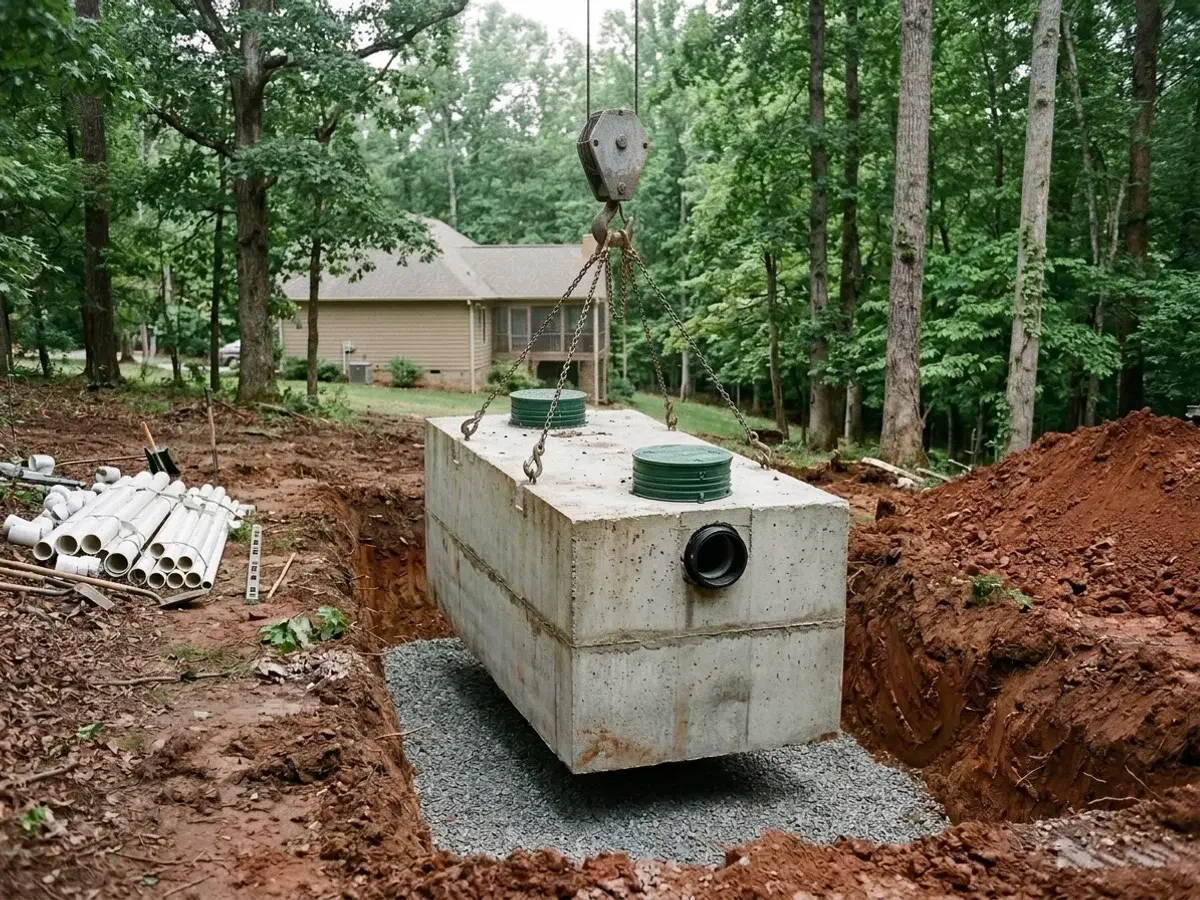
Once the Construction Permit is issued, a licensed septic installer excavates the site, sets the new tank, and installs the distribution box, pumps, treatment units, and absorption lines according to the approved design.
Before the trenches are covered with final topsoil, the installation is inspected and an as-built drawing is filed with the health department. The county then issues the Operation Permit authorizing the system for use.
Because every lot has different soil and topography, installation costs vary widely from one property to the next. Key factors that drive project estimates include:
For homeowners reviewing county permit paperwork or checking state codes, Virginia onsite sewage installations are governed by the following regulations:
In Virginia, residential septic capacity is sized primarily by the number of bedrooms in the home—calculated at 150 gallons per bedroom per day—rather than the number of bathrooms or current occupants. Adding a bedroom often requires verifying that your tank and drain field are permitted for the higher daily flow.
Conventional gravity systems require deep, permeable soil above bedrock and the seasonal water table so wastewater filters naturally. Many properties in Central Virginia and around Lake Anna have heavy clay soil, shallow rock, high water tables, or shoreline setbacks. On those lots, an alternative system treats the wastewater further before dispersing it into shallower soil.
Contractors can give rough ballpark ranges early on, but they cannot provide an accurate, itemized installation bid until a licensed soil evaluator or engineer has tested the soil and completed the system design. The design determines whether you need a gravity trench system, a pump chamber, or an engineered treatment unit.
Precast concrete and fiberglass septic tanks commonly last 30 years or more, and a properly sited drain field can function for 25 to 30+ years when the tank is pumped regularly and the drain field is protected from excess water and vehicle weight.
Find septic contractors serving your area.