SepticVA

Septic Tank Pumping & Cleaning

Routine septic pumping clears out the heavy sludge at the bottom of your tank and the grease layer floating on top before those solids can wash into—and clog—your drain field. Most homes need a pump-out every 3 to 5 years depending on tank size and household occupancy.

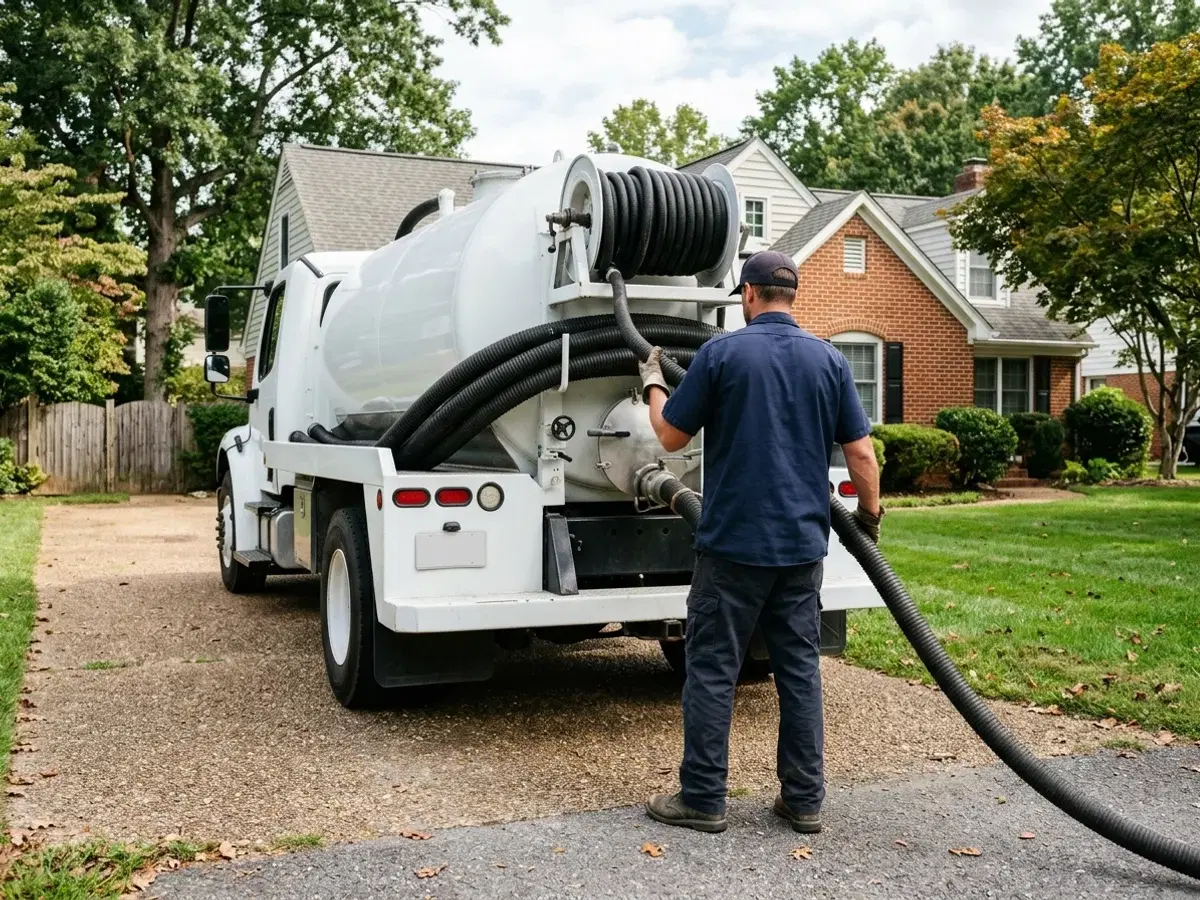
Septic technician in work gloves unspooling a suction hose from the rear reel of an unbranded white vacuum truck on a residential driveway

Local Septic Pumping Contractors

Contact local septic pumping companies directly by phone or website:

View All 18 Pumping Contractors

All In Septic Services

Louisa, VA • Serves Louisa County, Lake Anna, Spotsylvania County +3 more

Specialties

Septic Tank Pumping & Cleaning • Real Estate Septic Inspections • Septic System Repairs • Septic Tank & Drainfield Installation

Business information from public sources
Company Profile

Drainfield Solutions, LLC

Milford, VA • Serves Caroline County, Fredericksburg, Spotsylvania County +4 more

Specialties

Conventional & Alternative Septic Installation • Drainfield Repair & Replacement • AOSS Operation & Maintenance • Routine Septic Tank Pumping

Business information from public sources
Company Profile

When Septic Tank Pumping Is Needed

You should never wait for a slow drain or sewage odor to schedule a pump-out. By the time wastewater backs up inside the house, solid sludge may have already overflowed into the drain field. Schedule pumping based on how your household uses the system:

Every 3 to 5 Years for Most Homes

A standard 1,000-to-1,250-gallon tank serving three or four full-time residents typically needs pumping every 3 to 5 years. Larger families or homes that use a kitchen garbage disposal accumulate sludge faster and often need service every 2 to 3 years.

5-Year Chesapeake Bay Preservation Area Rule

While the 3-to-5-year schedule is a general guideline across Virginia, properties located inside mapped Chesapeake Bay Preservation Areas (including parts of Fredericksburg, Spotsylvania, Stafford, and Caroline County) are required by local ordinance to have their tank pumped or certified by inspection at least once every 5 years.

Seasonal & Vacation Properties

Lake Anna cottages and short-term rentals that host large weekend groups experience heavy water surges over short periods. Having the tank and outlet filter checked before peak summer season helps prevent holiday weekend backups.

Before Buying or Selling a Home

Pumping the tank is a standard part of a real estate septic inspection so the technician can see the interior concrete walls, partition, and inlet/outlet baffles.

What Proper Septic Pumping Involves

Inside your septic tank, wastewater separates into three layers: floating grease and lighter solids at the top (scum), clearer liquid in the middle (effluent), and heavy digested solids at the bottom (sludge). A thorough service visit covers four essential steps:

Service StepWhat the Technician Should Do
1. Open the Main Access LidsUncover and pump through the main 20-to-24-inch manhole lids (including both compartments on a two-chamber tank). A tank cannot be properly cleaned through a narrow 4-inch inspection pipe.
2. Remove Scum, Liquid & SludgeBreak up the floating crust and agitate or back-flush the liquid while vacuuming so dense bottom sludge is removed along with the liquid.
3. Clean the Outlet Effluent FilterIf your tank has a removable plastic filter cartridge in the outlet tee, pull it out, hose off trapped lint and solids into the tank, and reinstall it.
4. Check Baffles & Water LevelVisually inspect the inlet and outlet baffles for damage, check whether water is running back into the tank from the drain field (a sign of drain-field saturation), and note findings on your receipt.

What Affects the Cost of Septic Pumping

Septic contractors set their own rates, and quotes vary depending on the layout of your property and tank. When requesting an estimate, expect pricing to depend on:

  • Tank capacity and sludge buildup: Larger tanks (such as 1,250 or 1,500 gallons) or tanks that have gone many years without service take longer to agitate and carry higher disposal volume costs than a standard 1,000-gallon tank.
  • Lid depth and digging: If your tank has ground-level access risers, the technician can open the lids immediately. If the concrete lids are buried under soil and sod, most companies charge an additional labor fee to locate and dig them up.
  • Distance from the driveway: Vacuum trucks carry a standard length of suction hose (often 100 to 150 feet). Tanks located far behind the house or down a steep slope may require extra hose sections.
  • Pump chambers or grease traps: If your system has a separate pump tank or treatment basin that also needs to be pumped out, ask whether it is included in the base quote.

How to Choose a Septic Pumping Contractor

  • 1. Confirm state hauling permits: Septage haulers in Virginia must hold a permit from the Virginia Department of Health (VDH) to transport and dispose of waste at an approved treatment facility.
  • 2. Ask what the base quote includes: Before booking, ask whether the quoted price covers up to a specific gallon limit, whether cleaning the outlet filter is included, and what the fee is if buried lids need to be dug up.
  • 3. Request a written service receipt: Always keep the invoice showing the date, gallons pumped, and any technician notes about your baffles or tank level—especially if you need documentation for county Chesapeake Bay Preservation Area records or a future home sale.

U.S. EPA Video: Why Routine Septic Pumping Matters

Public Education Resource • U.S. Environmental Protection Agency (EPA)

Pump Your Tank! — U.S. EPA SepticSmart Quick Tip

Watch on YouTube

Illustrates how sludge and scum layers accumulate in a residential septic tank and why periodic pumping protects the soil absorption field.

Source: U.S. EPA SepticSmart Education Materials. Embedded via privacy-enhanced mode (`youtube-nocookie.com`). Reference to U.S. EPA educational materials does not imply government endorsement of SepticVA or any listed contractor.

Septic Pumping & Cleaning FAQs

Is there a difference between septic pumping and septic cleaning?

In practice, most Virginia contractors use the terms interchangeably to describe removing the floating scum layer, liquid wastewater, and heavy bottom sludge from the tank. Some companies use 'cleaning' to mean an extended service that also rinses the interior walls and washes the outlet effluent filter. When you call for an estimate, ask the company to confirm that they pump both compartments through the main access lids and remove all settled sludge.

How often does a household septic tank need to be pumped?

As a general guideline, the U.S. EPA recommends inspecting a conventional septic tank every 1 to 3 years and pumping it every 3 to 5 years, depending on tank size and how many people live in the house. If your property lies within a mapped Chesapeake Bay Preservation Area—which includes portions of Fredericksburg, Spotsylvania, Stafford, and Caroline County—local ordinances require a pump-out or certified inspection at least once every 5 years.

Do septic tank additives replace the need for routine pumping?

No. According to the U.S. EPA, neither biological enzymes nor chemical additives eliminate the need to pump solid waste from your tank. Some chemical additives can even harm the bacteria that break down waste or cause settled sludge to stir up and wash into the drain field.

Should I install septic tank risers if my lids are buried?

If your septic tank lids are buried a foot or more underground, contractors often charge an excavation fee each time they dig them up. Having a contractor install flush, ground-level access risers with secure lids makes future pump-outs faster and avoids repeated digging in your yard.